

A new heavyweight is entering the skies, and it is built to carry more than the average drone could ever dream of. The DJI FlyCart 100 is designed for the jobs where trucks struggle, helicopters cost too much, and traditional delivery systems slow everything down. If you have ever wondered how far aerial logistics can go, this machine gives a clear answer.
The FlyCart 100 steps in as DJI’s most capable cargo drone yet. It combines power, smart design, and advanced safety tech to meet the demands of real-world transport. Whether the mission involves moving equipment across a construction site, sending supplies to a remote community, or supporting emergency operations, this drone is built to take on tasks that once required larger and more expensive solutions. In this guide, we explore what the FlyCart 100 offers, why it matters, and how it might reshape modern logistics.

What Is the DJI FlyCart 100?
The DJI FlyCart 100 is a heavy-lift cargo drone designed for demanding industrial and logistical missions. Unlike drones made for imaging or light transport, this model is entirely focused on moving substantial loads with reliability and precision. It represents DJI’s next step into industrial drone operations, offering far more lifting power and operational strength than previous FlyCart models.
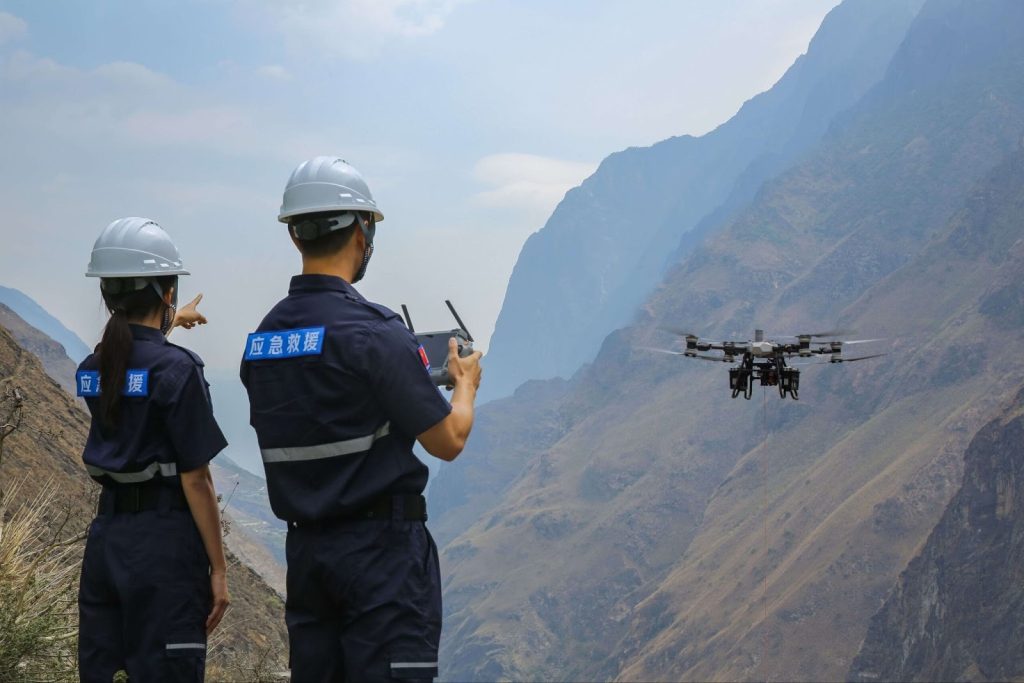
The drone is intended for environments that are challenging to access with conventional vehicles. Whether it’s steep terrain, remote sites, or disaster-affected areas, the FlyCart 100 provides a practical aerial solution. Its robust airframe, enhanced safety systems, and adaptable delivery mechanisms make it a reliable partner for organizations that require consistent and efficient transport. With its role clear, the next sections break down the technical strengths that make this drone exceptional.
Key Features and Core Specifications
The FlyCart 100 is built with strength, stability, and efficiency in mind. Its design emphasizes lifting capability, consistent flight performance, and durability in real-world conditions. Below is a detailed overview of its core specifications and features:
| Category | Details |
| Max Payload Capacity | Up to 82 kg per single axis with high-torque motors |
| Maximum Takeoff Weight | 149.9 kg |
| Propeller Size | 62 inch carbon fiber blades |
| Motor Layout | Dual motor collaborative architecture with 8 rotors |
| Top Speed | Around 72 km/h |
| Maximum Range | Up to 26 km unloaded |
| Loaded Flight Range | Approximately 6–12 km depending on battery configuration |
| Ingress Protection Rating | IP55 for light rain and dust |
| Battery Type | DB2160 high-capacity batteries with hot swap and dual electric board options |
| Charging Capability | Fast charging support up to 9 minutes; flexible multiple device charging |
| Delivery Methods | Cargo box mode and winch mode |

Powerful Payload Options
The FlyCart 100 can lift up to 82 kilograms per single axis, making it ideal for short, heavy transport missions. Dual battery setups slightly reduce payload capacity but increase flight distance and stability for longer operations.
Strong Flight Structure
Its takeoff weight places it firmly in the industrial class. Large carbon fiber propellers and a dual-motor coaxial layout provide reliable lift while maintaining smooth, controlled flight even under maximum load.
Flexible Range and Speed
Unloaded flights can reach 26 kilometers, while loaded operations generally cover 6 to 12 kilometers depending on battery configuration. A top speed of 72 km/h reduces transport time for back-to-back missions.
Efficient Power System
Hot-swappable DB2160 batteries ensure minimal downtime. Fast charging and wireless charging support make field operations more efficient, and energy-efficient design maintains performance under heavy loads.
Built for Real Conditions
The IP55 rating allows operation in light rain and dusty environments, while robust construction ensures reliability even in challenging outdoor conditions.
Advanced Delivery Functions
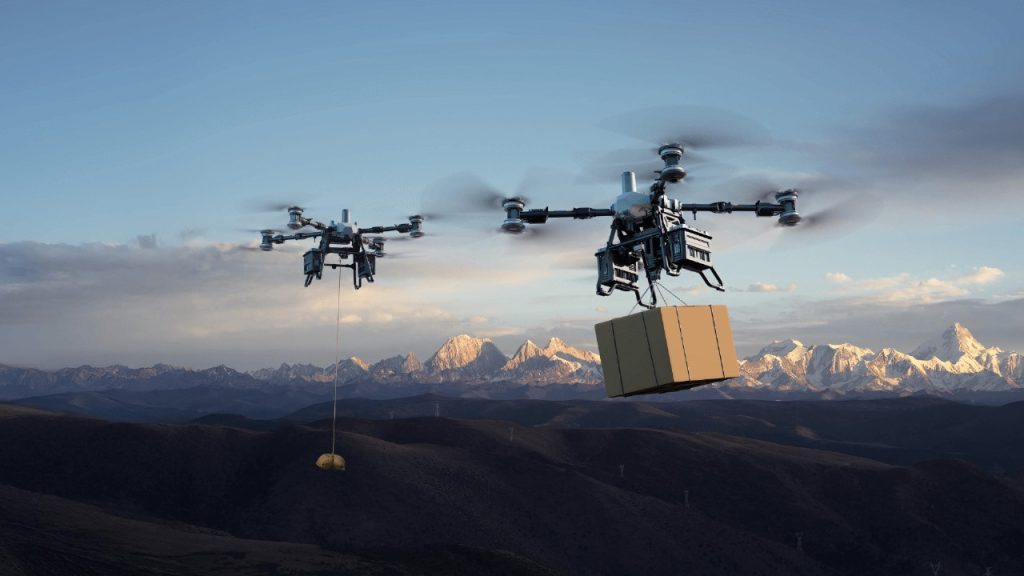
Cargo Mode
The drone can carry materials in a secure cargo box, ideal for open construction sites, industrial zones, or areas with safe landing space. The design keeps cargo stable during transport to prevent sway and damage.
Winch Mode
An active hook with a 30-meter retractable cable allows precise lowering of cargo where landing is impractical. The drone can lift or lower cargo at 1.2 meters per second even under heavy loads. A three-axis force sensor system provides millisecond-level swing correction and real-time weighing to avoid overload. For emergencies, the one-click escape function safely releases cargo. This mode is ideal for remote locations, rooftops, disaster zones, and other hard-to-reach sites.
Safety and Intelligent Systems
Safety is central to the FlyCart 100’s design. Its five-eye vision system and millimeter-wave radar detect obstacles in all directions, while advanced algorithms offer pedestrian and vehicle protection.
AR-assisted displays help operators maintain situational awareness, and automatic attitude adjustment improves flight stability in windy conditions. A standard parachute system can deploy during emergencies to protect both people and property. Multiple fill lights ensure visibility in low-light situations. The system also includes millisecond-level swing correction and real-time weighing, and the one-click escape function enhances cargo safety in unexpected scenarios.
Power, Battery, and Charging
The FlyCart 100 is powered by DB2160 high-capacity batteries, with an optional dual electric board system for added safety and efficiency. Hot swapping allows uninterrupted operations, while fast charging can recharge the drone in just 9 minutes. Multiple charging devices can be used simultaneously, and wireless charging adds convenience for field deployments. Energy-efficient design ensures reliable performance even when handling heavy loads over extended missions.
Image Transmission, Connectivity, and Control
The FlyCart 100 supports O4 image transmission for stable, clear video feeds. Transmission can be enhanced with relays or 4G links, ensuring connectivity even in complex or signal-blocked environments.
Operators can use one-machine dual control, allowing seamless handoff between pilots. The DJI Delivery App simplifies route planning and cargo management, providing easy setup of loading and unloading points and real-time terrain point cloud maps. The interface is intuitive, making flight operations efficient and reducing potential errors during missions.
Real-World Use Cases
The FlyCart 100 is designed for practical applications across multiple industries:
- Construction and civil engineering: transport heavy equipment to hard-to-reach areas.
- Remote village supply delivery: provide essential materials where ground vehicles cannot go.
- Disaster relief and emergency operations: deliver medical supplies and rescue equipment.
- Energy and utilities: transport tools or equipment to power lines, telecom towers, and offshore sites.
- Mining and exploration: carry instruments or resources in rugged terrain.
- Maritime operations: deliver materials to ships or isolated offshore platforms efficiently.
Its versatility and specialized systems make it an asset for any operation requiring heavy-lift aerial transport.
The Future of Heavy-Lift Drone Delivery
The DJI FlyCart 100 sets a new standard for heavy-lift cargo drones, combining power, precision, and advanced safety systems to tackle missions that were once challenging or impossible. From industrial transport to emergency deliveries, this drone offers unmatched versatility and efficiency.
Experience the future of heavy-lift drone delivery. Connect with Dynatech Innovations today to discover how the new DJI FlyCart 100 can transform your logistics operations and unlock new possibilities in industrial and remote-site transport.